It usually starts small. A little tingling in your toes. A patch of numbness across the ball of your foot. Maybe your hands feel like they’re wearing invisible gloves, even when they’re not.
Then it doesn’t go away.
If you’ve been living with unexplained numbness, burning, or “pins and needles” in your hands or feet, you’re not imagining it — and you’re not alone. Peripheral neuropathy affects an estimated 20 million people in the United States, and for many, it gets progressively worse without the right treatment.
In this guide, we’ll break down what it actually is, what causes it, how it’s diagnosed, and the full range of peripheral neuropathy treatment options available today — including how regenerative medicine approaches like PRP and stem cell therapy are being used to support nerve healing, not just mask the pain.
What Is Peripheral Neuropathy?
Peripheral neuropathy is damage to the peripheral nerves — the vast network of nerves that carries signals between your brain and spinal cord (the central nervous system) and the rest of your body, including your hands, feet, arms, legs, and internal organs.
These nerves handle three main jobs:
- Sensory nerves — sense temperature, touch, pain, and vibration
- Motor nerves — control muscle movement
- Autonomic nerves — regulate involuntary functions like heart rate, digestion, and blood pressure
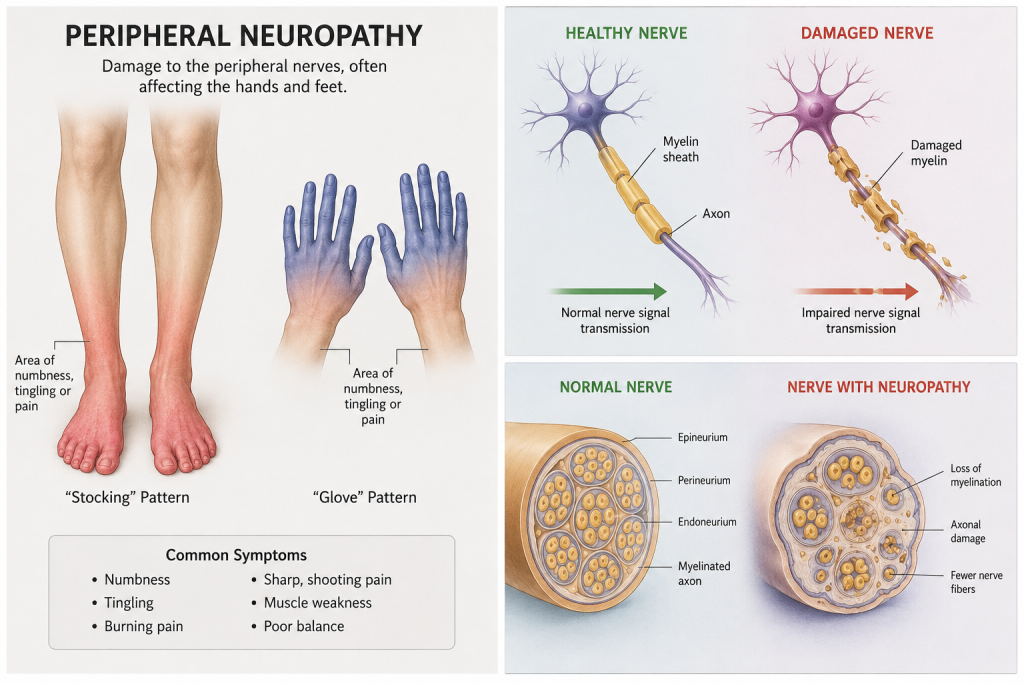
When these nerves are damaged, the signals they send get scrambled, weakened, or lost entirely. The result is the hallmark symptoms most people associate with neuropathy: numbness, tingling, burning pain, and muscle weakness, most commonly in the feet and hands first.
Peripheral neuropathy isn’t a single disease — it’s an umbrella term for damage to these nerves, and there are more than 100 identified types, each with different underlying causes.
What Are the Symptoms of Peripheral Neuropathy?
Symptoms depend on which nerves are affected, but common signs include:
- Numbness or reduced sensation in the hands or feet
- Tingling or a “pins and needles” feeling
- Sharp, stabbing, throbbing, or burning pain
- Extreme sensitivity to touch (even light contact, like a bedsheet, can hurt)
- Muscle weakness or loss of coordination
- A feeling of wearing gloves or socks when you aren’t
- Difficulty with balance, especially in low light
- In more advanced cases: changes in blood pressure, digestion, sweating, or bladder function (if autonomic nerves are involved)
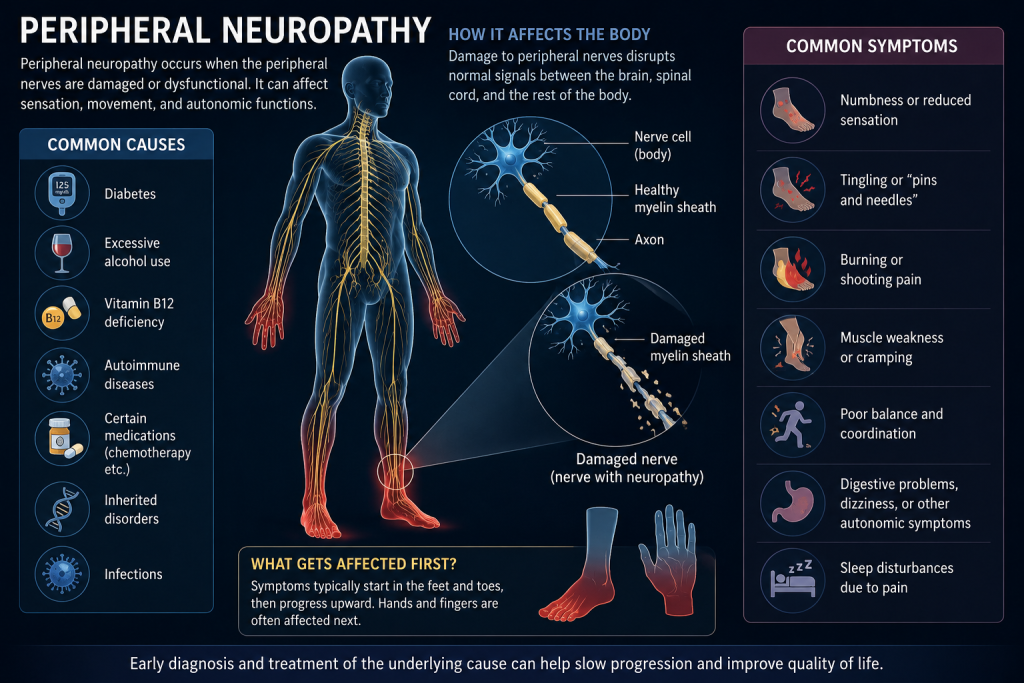
Neuropathy is typically length-dependent, meaning it tends to start in your toes and feet — the farthest points from your spinal cord — and gradually moves upward before appearing in the hands. Symptoms are usually symmetric, affecting both sides of the body at the same time.
What Causes Peripheral Neuropathy?
There isn’t one single cause. Some of the most common include:
Diabetes. This is by far the leading cause of peripheral neuropathy. Chronically elevated blood sugar damages nerve fibers over time, a condition known as diabetic neuropathy.
Physical trauma or compression. Car accidents, falls, sports injuries, or repetitive stress (like carpal tunnel syndrome) can injure or compress nerves.
Autoimmune disease. Conditions like rheumatoid arthritis, lupus, and Guillain-Barré syndrome can cause the immune system to attack nerve tissue.
Infections. Shingles, Lyme disease, and HIV are all associated with nerve damage.
Toxin exposure. Heavy metals, certain chemotherapy drugs, and excessive alcohol use can all damage peripheral nerves.
Vitamin deficiencies. Especially B1, B6, B12, and E, which are essential for nerve health.
Kidney or thyroid dysfunction. Both can allow toxins to build up or disrupt the metabolic processes nerves depend on.
Genetics. Inherited conditions like Charcot-Marie-Tooth disease cause neuropathy that runs in families.
In some cases, despite thorough testing, no clear cause is found. This is called idiopathic peripheral neuropathy, and it accounts for a meaningful percentage of diagnoses.
The Stages of Peripheral Neuropathy
Peripheral neuropathy is progressive for many patients, especially when the underlying cause (like blood sugar) isn’t well controlled. It’s generally described in four stages:
- Stage 1 — Early symptoms. Occasional numbness, tingling, or mild discomfort that comes and goes. Easy to dismiss or ignore.
- Stage 2 — Regular symptoms with pain. Symptoms become more frequent and start to include pain, along with early balance or coordination issues.
- Stage 3 — Intense, constant pain. Numbness and pain become chronic. Balance problems increase the risk of falls, and daily tasks become noticeably harder.
- Stage 4 — Complete numbness. The most advanced stage. Sensation loss is significant, motor function may be seriously impaired, and the risk of unnoticed injuries or infections (particularly in the feet) rises sharply.
The earlier neuropathy is caught and treated, the more nerve function can typically be preserved. This is one of the biggest reasons not to wait out mild symptoms.
How Is Peripheral Neuropathy Diagnosed?
Because neuropathy symptoms overlap with so many other conditions, diagnosis usually involves a combination of:
- A detailed medical history and physical exam, including reflexes, muscle strength, and sensation testing
- Blood work to check for diabetes, vitamin deficiencies, thyroid issues, and autoimmune markers
- Nerve conduction studies (NCS), which measure how fast electrical signals move through your nerves
- Electromyography (EMG), which evaluates electrical activity in your muscles
- Imaging, such as MRI or diagnostic ultrasound, to rule out structural causes like a herniated disc or nerve compression
- Nerve biopsy, in rare or unclear cases
Getting an accurate diagnosis matters. Treating the symptoms without identifying the underlying cause often means the nerve damage continues even as you manage the pain.
Conventional Treatment Options for Peripheral Neuropathy
Traditional neuropathy treatment generally falls into a few categories:
Medications
- Anticonvulsants like gabapentin or pregabalin, which calm overactive nerve signals
- Antidepressants, particularly tricyclics and SNRIs like duloxetine, which can reduce nerve pain
- Topical treatments, including capsaicin cream and lidocaine patches
- Pain relievers, from over-the-counter options to prescription-strength medication for severe cases
Physical Therapy
Targeted exercise can help maintain muscle strength, improve balance, and reduce the risk of falls as coordination declines.
TENS Therapy
Transcutaneous electrical nerve stimulation uses low-level electrical currents delivered through the skin to help interrupt pain signals and, in some cases, support nerve function.
Treating the Underlying Cause
If neuropathy stems from diabetes, a vitamin deficiency, or a thyroid condition, managing that root cause is often the single most effective step toward slowing or improving symptoms.
The challenge with most conventional treatment is that medications largely manage symptoms — they don’t repair the underlying nerve damage. That’s where regenerative medicine has become an increasingly common part of the conversation.
Can Regenerative Medicine Help Peripheral Neuropathy?
This is the question we hear most often, and it’s a fair one. Regenerative medicine doesn’t aim to numb the nerve or block the pain signal — it aims to support the nerve’s own capacity to heal.
PRP (Platelet-Rich Plasma) for Nerve Pain
PRP is created by drawing a small sample of your own blood and concentrating the platelets, which are rich in growth factors. When injected around an affected nerve, these growth factors are thought to help:
- Reduce local inflammation around the nerve
- Improve blood flow to the area, which nerves depend on for repair
- Support the biological signaling involved in nerve tissue repair
Animal studies have shown PRP applied to injured nerves can improve nerve fiber structure and function during healing. Human research is still developing, but early clinical use has been promising enough that PRP is increasingly offered as part of a broader neuropathy treatment plan.
Stem Cell and MFAT Therapy for Nerve Regeneration
Stem cells — including those derived from a patient’s own fat tissue (Micro-Fragmented Adipose Tissue, or MFAT) — are being studied for their ability to support nerve repair in a few specific ways:
- They can release neurotrophic factors, which are proteins that support nerve cell survival and growth
- They may help modulate the inflammatory response around damaged nerves
- Preclinical research suggests they can support the function of Schwann cells, the cells responsible for insulating and protecting peripheral nerves
A growing body of research, including systematic reviews of mesenchymal stem cell use in peripheral nerve injury, points to real biological plausibility here. That said, it’s important to be direct about where the science currently stands: most of the strongest evidence comes from lab and animal studies, and large-scale human clinical trials are still catching up. Regenerative treatments for neuropathy are best understood as a promising, evolving option, not a guaranteed cure.
Regenerative Laser Therapy
Low-level laser therapy (also called photobiomodulation) uses specific wavelengths of light to stimulate cellular activity in the treated area. For neuropathy patients, it’s often used to improve local circulation and support the tissue environment nerves need to recover.
Regenerative Medicine vs. Conventional Treatment: What’s the Difference?
| Conventional Treatment | Regenerative Medicine |
|---|
| Primary goal | Manage/mask symptoms | Support underlying nerve repair |
| Common methods | Medication, TENS, physical therapy | PRP, stem cell (MFAT), laser therapy |
| Invasiveness | Low (pills), moderate (some procedures) | Minimally invasive injections |
| Timeline | Ongoing, often daily management | Series of treatments over weeks/months |
| Best used for | Symptom control, especially in advanced stages | Patients seeking to address the biological source of nerve damage, often alongside conventional care |
Most patients don’t have to choose one path exclusively. In practice, regenerative treatments are frequently used alongside — not instead of — medical management of the underlying condition (like blood sugar control for diabetic neuropathy).
Who Is a Good Candidate for Regenerative Neuropathy Treatment?
Regenerative approaches tend to be a reasonable option to explore if you:
- Have been diagnosed with peripheral neuropathy, particularly in stage 1–3
- Have tried medication and haven’t found adequate relief, or want to avoid long-term reliance on it
- Are managing an underlying condition (like diabetes) that’s under reasonable control
- Want to explore options that target nerve repair, not just symptom suppression
- Are looking for a minimally invasive approach before considering more aggressive interventions
Because neuropathy has so many possible causes, a proper diagnostic workup is the starting point — not a guess. A qualified provider should be able to explain, based on your specific case, whether regenerative treatment is a reasonable fit.
Self-Care Tips for Managing Neuropathy
Alongside professional treatment, day-to-day habits make a real difference:
- Inspect your feet daily. Reduced sensation means injuries can go unnoticed and lead to infection, especially for diabetic patients.
- Choose supportive, well-fitted footwear. Protects feet that can’t always “feel” a problem developing.
- Stay active. Regular movement supports circulation and helps maintain muscle strength and balance.
- Eat to support nerve health. A balanced diet with adequate B vitamins can help address deficiency-related neuropathy.
- Limit alcohol and avoid tobacco. Both directly contribute to nerve damage and reduced blood flow.
- Manage your underlying condition closely. If diabetes, thyroid disease, or an autoimmune condition is driving your neuropathy, tight management is one of the most effective things you can do.
When Should You See a Doctor for Neuropathy?
Don’t wait out numbness or tingling that doesn’t resolve. See a provider if you notice:
- Numbness, tingling, or burning that persists for more than a few days
- Symptoms that are worsening or spreading
- New weakness, balance problems, or falls
- Any wound on your foot that isn’t healing, especially if you have diabetes
- Pain that’s interfering with sleep or daily activities
Earlier evaluation generally means more treatment options and a better chance of preserving nerve function.
Why Choose Opdahl Regenerative Medicine for Neuropathy Treatment
At Opdahl Regenerative Medicine, we start with an accurate diagnosis — not a guess. Using thorough evaluation and diagnostic ultrasound, our team identifies what’s actually driving your nerve pain before recommending a treatment plan. From there, we offer a full range of regenerative options, including PRP, stem cell (MFAT) therapy, and regenerative laser therapy, tailored to your specific diagnosis and goals.
We treat patients across Southwest Washington and the Portland metro area at our Battle Ground, Vancouver (Hazel Dell), East Vancouver, Woodland, and Gresham locations.
If numbness, tingling, or nerve pain has been affecting your daily life, you don’t have to just manage it indefinitely.
Request an Appointment Today
Frequently Asked Questions
What is the most effective treatment for peripheral neuropathy?
There isn’t a single “best” treatment for everyone — it depends on the underlying cause and how advanced the neuropathy is. The most effective approach usually combines managing the root cause (like blood sugar control), symptom management (medication, physical therapy), and, for many patients, regenerative treatments like PRP or stem cell therapy aimed at supporting nerve repair.
Can peripheral neuropathy be reversed?
It depends on the cause. Neuropathy caused by a vitamin deficiency, certain infections, or early-stage diabetes can sometimes improve significantly once the underlying issue is addressed. Neuropathy caused by long-term nerve damage or genetic conditions is less likely to fully reverse, but symptoms can still often be reduced and progression slowed with the right treatment plan.
Does insurance cover regenerative treatment for neuropathy?
Coverage varies by insurer, plan, and treatment type. Our office can review your specific coverage and discuss costs during your consultation.
How long does it take to see results from PRP or stem cell therapy for neuropathy?
Because these treatments work by supporting the body’s own healing process, results are typically gradual rather than immediate. Many patients report noticing changes over several weeks to a few months, and treatment plans often involve more than one session.
Is regenerative treatment for neuropathy painful?
Most patients describe the injections as similar to a standard shot, with mild, temporary soreness afterward. Providers typically use local anesthetic and precise, ultrasound-guided technique to minimize discomfort.
What’s the difference between PRP and stem cell therapy for nerve pain?
PRP uses concentrated platelets and growth factors from your own blood to reduce inflammation and support tissue repair. Stem cell (MFAT) therapy uses regenerative cells, often derived from your own fat tissue, which have a broader potential to support nerve cell survival and repair. Both are regenerative approaches; your provider can help determine which — or which combination — fits your diagnosis.
Can neuropathy get worse if left untreated?
Yes, in many cases. Especially when the underlying cause (like uncontrolled diabetes) isn’t addressed, neuropathy tends to progress through the stages described above, increasing numbness, pain, and the risk of complications like unnoticed foot injuries.
This article is for informational purposes only and is not a substitute for professional medical advice, diagnosis, or treatment. Always consult a qualified healthcare provider regarding your specific condition.