Table of Contents
Last Updated: October 18, 2026
Understanding Non-Surgical Back Pain Treatment
Back pain affects millions every year, but most cases don’t need surgery. Non-surgical back pain treatment includes physical therapy, exercises, injections, and manual therapies that reduce pain and restore mobility without an operating room.
At OPDAHL Regenerative Medicine, we identify the root cause of your pain using advanced diagnostic tools like dynamic ultrasound, then build a treatment plan.
Conservative care works because it addresses the underlying problem. Whether your pain comes from muscle tension, disc pressure, inflammation, or poor movement patterns, the right non-surgical treatment can reduce discomfort and help you return to the activities you love.
Key Takeaway
Most back pain improves with conservative treatment options that don’t involve surgery. The key is finding the right combination of therapies for your specific situation.
Physical Therapy for Lower Back Pain
Physical therapy is one of the most effective non-surgical back pain treatment options. A skilled therapist teaches exercises that strengthen your core, improve flexibility, and correct movement patterns causing pain.
Physical therapy works by:
- Building strength in muscles that support your spine
- Improving range of motion and flexibility
- Teaching proper body mechanics for daily activities
- Reducing inflammation through targeted movement
- Preventing future injuries through preventive care
The therapist assesses your condition, identifies which movements cause pain and which feel safe, then gradually progresses your exercises as strength and mobility improve.
Most people see improvement within 4-6 weeks of consistent therapy, depending on how long you’ve had pain and how well you follow the home exercise program. Staying committed at home is crucial for lasting results.
Pro Tip
Ask your physical therapist to teach you exercises you can do at home. Consistency matters more than intensity. Three 15-minute sessions per week at home often beats one weekly clinic visit.
Lower Back Pain Exercises and Stretches That Work
Stretching improves flexibility and reduces muscle tension, while strengthening exercises build the muscles that support your spine and reduce strain on discs and joints.
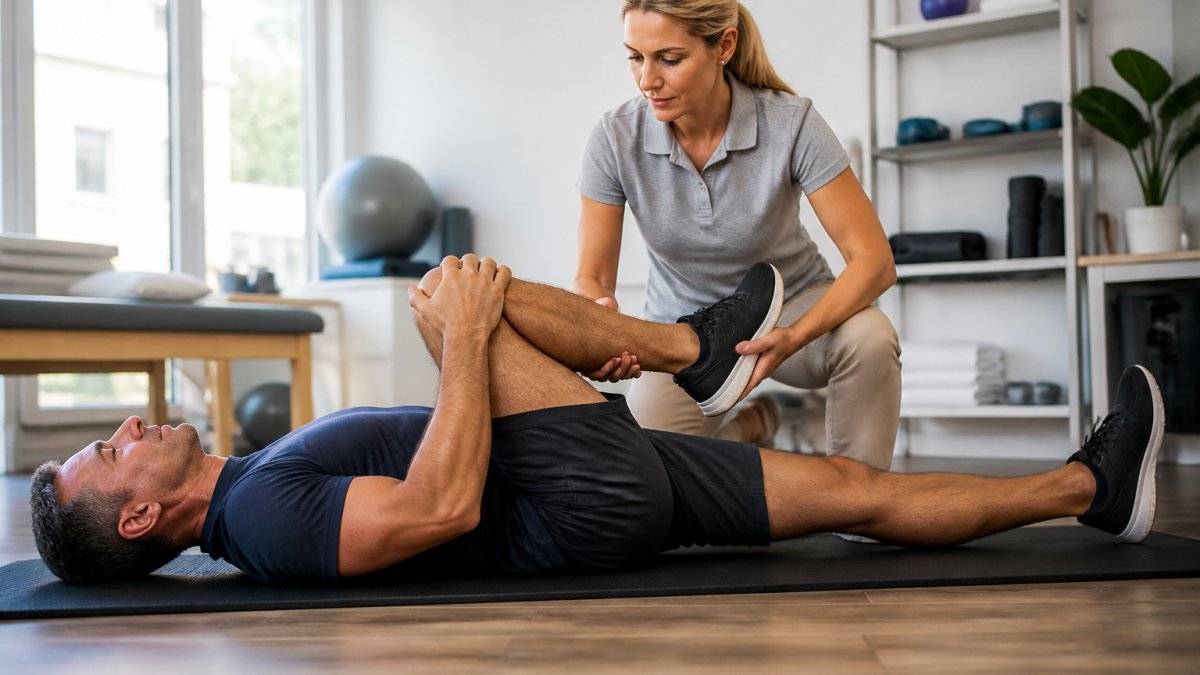 Physical therapist guiding a patient through non-surgical back pain treatment exercises in a bright clinic.
Common stretches for lower back pain include:
- Knee-to-chest stretch: lying on your back, gently pull one knee toward your chest
- Hamstring stretch: sitting or lying down, reach toward your toes to lengthen the back of your legs
- Piriformis stretch: lying on your back, cross one leg over the other and gently pull toward your chest
- Cat-cow stretch: on hands and knees, alternate between arching and rounding your spine
Strengthening exercises include:
- Planks: hold a straight line from head to heels to engage your core
- Bird dogs: on hands and knees, extend opposite arm and leg
- Bridges: lying on your back with knees bent, lift your hips toward the ceiling
- Dead bugs: lying on your back, move opposite arm and leg in a controlled manner
Start slowly and stop if you feel sharp pain. Mild discomfort is normal as you build strength, but sharp or shooting pain means you should modify or skip that movement.
Perform stretches 2-3 times per day, holding each for 20-30 seconds. Do strengthening exercises 3-4 times per week with rest days between sessions to allow your muscles to recover.
Watch Out
Pain that shoots down your leg, numbness, or tingling suggests nerve involvement. Stop the exercises and consult a healthcare provider to rule out more serious conditions.
Spinal Injections for Back Pain: Types and Effectiveness
Spinal injections deliver medication directly to the source of pain, but their role is narrower than many assume. They are not a cure; they are a short-term tool to reduce inflammation enough that active treatment, physical therapy, exercise, and movement, can work.
What the evidence says
Guidelines generally support epidural steroid injections for radicular pain, pain that shoots down a leg, when conservative care hasn’t provided enough relief. For axial low back pain without nerve involvement, evidence is weaker and routine use is often discouraged. Injections help most when the diagnosis is clear, such as a disc herniation compressing a nerve root.
Relief is typically temporary, weeks to a few months, and doesn’t change the underlying condition (pubmed.ncbi.nlm.nih.gov). Injections are best used as a bridge to physical therapy, not as a standalone strategy.
Types of spinal injections
Epidural steroid injections place corticosteroid in the epidural space around the spinal cord and nerve roots. They reduce inflammation and swelling that may be pressing on nerves.
Facet joint injections target the small joints along the spine. They can help diagnose and treat pain from facet joint arthritis or inflammation.
Trigger point injections deliver local anesthetic, sometimes with steroid, into tight, painful muscle bands. They relax muscle tension and can provide short-term relief for myofascial pain.
Transforaminal injections place medication near the nerve root where it exits the spine.
Medial branch blocks are diagnostic injections that numb the small nerves supplying facet joints.
Risks, side effects, and contraindications
Most people tolerate injections well, but they are not risk-free. Common side effects include soreness at the injection site, temporary numbness or weakness, and a brief increase in pain before relief. Rare complications include infection, bleeding, nerve injury, allergic reaction, dural puncture (spinal headache), and serious neurologic events.
Contraindications include active infection, bleeding disorders or unmanageable anticoagulant use, uncontrolled diabetes (steroids raise blood sugar), and allergy to injectable components. Pregnant or immunocompromised patients should discuss risks with their clinician. Because repeated steroid injections may have cumulative effects, guidelines recommend limiting frequency and using the lowest effective dose.
Realistic expectations and practical burden
Injections are outpatient procedures, often done with fluoroscopy or ultrasound guidance. The appointment is short, but you may need someone to drive you home. Relief can begin within days but may take up to two weeks. Many patients get 2-4 injections per year, but the goal is to enable active treatment, not rely on them indefinitely.
Costs vary widely. Insurance coverage depends on the diagnosis and plan, and prior authorization is common. Ask for a good-faith estimate and check coverage before scheduling. (Source: the National Institute of Arthritis and Musculoskeletal and Skin Diseases (NIAMS))
Watch Out
Seek urgent care if you develop fever, severe headache, new weakness or numbness, or loss of bowel or bladder control after an injection. These can be signs of infection or nerve complications.
Manual Therapy, Chiropractic Care, and Massage
Manual therapy includes hands-on techniques that reduce pain, improve mobility, and restore function, complementing exercise and physical therapy.
Schedule Appointment →
Spinal manipulation applies controlled force to move joints through their range of motion.
Soft tissue mobilization uses hands-on pressure to release tight muscles and fascia, reducing tension and improving blood flow.
Massage therapy reduces muscle tension, promotes relaxation, and improves circulation. Many people find regular sessions help prevent pain from returning.
Joint mobilization gently moves joints to improve range of motion and reduce stiffness.
These therapies work best when combined with active treatment like exercise.
How Long Does Back Pain Last with Conservative Treatment
Recovery time varies based on how long you’ve had pain, the underlying cause, and how consistently you follow your plan. Acute pain from a recent injury often improves within 4-6 weeks; chronic pain typically takes longer.
Most people see meaningful improvement within 6-8 weeks of consistent conservative treatment. Pain may not disappear completely, but it becomes manageable and interferes less with daily activities.
Key factors that affect recovery time:
- Duration of pain: longer-standing pain takes longer to improve
- Consistency: regular exercise and therapy speed recovery
- Compliance: following your provider’s recommendations matters
- Underlying condition: some conditions respond faster than others
- Age and overall health: younger, healthier people often recover faster
- Work demands: physically demanding jobs may slow recovery
The goal isn’t just pain relief, it’s restoring function so you can work, exercise, and enjoy life without constant discomfort. Conservative treatment succeeds for most people who stay committed.
Key Takeaway
Expect improvement within 4-6 weeks, but full recovery often takes 2-3 months of consistent effort. Patience and consistency matter more than intensity.
Choosing the Right Non-Surgical Treatment for Your Situation
Selecting the best non-surgical back pain treatment depends less on the therapy’s label and more on your diagnosis, symptom pattern, and goals. The same treatment that helps one person can be ineffective for another, so a clinician’s assessment, history, physical exam, and imaging when indicated, should drive the plan.
Match treatment to your symptom pattern
Acute, mechanical low back pain (recent onset, no leg symptoms): Guidelines generally recommend staying active, avoiding bed rest, and using superficial heat.
Chronic low back pain (lasting more than 3 months): Exercise-based therapy is the cornerstone. Physical therapy and structured home exercise programs have the strongest evidence.
Radicular pain (shooting leg pain, numbness, tingling): This pattern suggests nerve involvement. Physical therapy with nerve gliding and directional preference exercises may help.
Neurogenic claudication (leg pain with walking, relieved by sitting or leaning forward): This pattern suggests spinal stenosis.
Myofascial pain (muscle tightness, trigger points): Manual therapy, massage, trigger point injections, and stretching can help.
Red flags: when to seek urgent care
Some symptoms require prompt medical evaluation and are not appropriate for routine conservative care. Seek urgent care or call emergency services if you have:
- Loss of bowel or bladder control
- New or progressive weakness in both legs
- Numbness in the saddle area (groin, buttocks, inner thighs)
- Fever, chills, or unexplained weight loss with back pain
- Severe pain after a fall or trauma
- Pain that is worse at night or at rest and not relieved by position changes
- History of cancer with new back pain
These can be signs of serious conditions such as cauda equina syndrome, infection, fracture, or malignancy. Do not delay evaluation.
Practical considerations: cost, coverage, and burden
Costs and coverage vary widely. Physical therapy is often covered with a copay; 8-12 visits is common. Chiropractic care may be covered but visit limits vary. Massage is often not covered. Injections usually require prior authorization and may have higher out-of-pocket costs. Ask for a good-faith estimate before starting.
Treatment burden matters too. Physical therapy requires consistent attendance and home exercise. Injections require procedure appointments and sometimes a driver. Manual therapy and massage require recurring visits. Choose a plan you can realistically sustain.
A stepwise approach
Most clinicians start with the least invasive, most evidence-supported options: activity modification, physical therapy, and exercise. Add manual therapy or massage if muscle tension is prominent. Consider injections if nerve pain or inflammation limits your ability to participate in therapy. Reassess after 4-6 weeks; if you’re not improving, revisit the diagnosis and consider a specialist referral.
At OPDAHL Regenerative Medicine, we use advanced diagnostic tools including dynamic ultrasound to identify exactly what’s causing your pain. This precision helps us recommend a treatment combination for your specific situation.
| Treatment Type | Best For | Time to Relief | Commitment Level |
|---|
| Physical Therapy | Building strength and correcting movement | 4-6 weeks | High (3+ sessions/week) |
| Manual Therapy | Reducing muscle tension and stiffness | 1-2 weeks | Medium (1-2 sessions/week) |
| Spinal Injections | Reducing inflammation and nerve pain | Days to weeks | Low (occasional appointments) |
| Chiropractic Care | Acute pain and mobility restrictions | 1-2 weeks | Medium (2-3 sessions/week) |
| Massage Therapy | Muscle relaxation and pain management | 1-2 weeks | Medium (weekly or bi-weekly) |
Key Takeaway
The right treatment depends on your diagnosis and symptom pattern, not on a one-size-fits-all list. Start with active, evidence-supported care, reassess regularly, and seek urgent care for red-flag symptoms.
Frequently Asked Questions
Can back pain improve without surgery?
Yes. Most acute and chronic back pain responds well to conservative care. Physical therapy, exercise, manual therapy, and targeted injections address inflammation, muscle tension, and mobility loss without surgical intervention. Recovery timelines vary based on the underlying cause and treatment approach, but many patients experience significant improvement within weeks to months of consistent non-surgical treatment.
How long does it take for non-surgical back pain treatment to work?
Timeline depends on treatment type and injury severity. Physical therapy typically shows improvement within 4-6 weeks of consistent participation. Spinal injections may provide relief within days to weeks. Manual therapy and exercise-based programs often require 8-12 weeks for meaningful functional gains. Chronic pain may need longer commitment, but most patients notice measurable progress before 3 months with proper adherence.
Are injections or physical therapy better for back pain?
Both serve different purposes. Physical therapy builds strength, improves mobility, and addresses root causes, ideal for long-term recovery and prevention. Spinal injections reduce inflammation and pain, often used to enable more effective physical therapy participation. Many treatment plans combine both: injections provide short-term relief while physical therapy develops lasting strength and function. The best choice depends on your specific diagnosis, pain level, and functional goals.
What should I do if conservative non-surgical back pain treatment isn’t working?
If standard conservative care hasn’t improved symptoms after 8-12 weeks, consult a spine specialist to reassess your diagnosis. Advanced diagnostic imaging, such as dynamic ultrasound, can help identify underlying issues. Some patients benefit from different treatment modalities, specialized injections, or a modified exercise approach. A qualified provider can help determine whether your condition requires more intensive intervention or a different treatment strategy before considering surgery.
Schedule Appointment