Last Updated: November 2, 2026
Quick Summary
The best treatment for rotator cuff tendinitis usually starts with modifying aggravating activities, then adding anti-inflammatory medicine, ice, and physical therapy. Many cases improve with conservative care, though a tear may need a different approach.
- Modify or reduce movements that flare your shoulder, such as overhead reaching and sleeping on the painful side.
- Apply a cold pack wrapped in a thin towel for about 15 to 20 minutes, several times a day when symptoms flare.
- Physical therapy restores motion and builds strength, progressing from pendulum swings to resistance band exercises.
- Corticosteroid injections provide quick relief but are temporary and repeated use is generally avoided.
- Consider a clinician evaluation if pain does not improve after several weeks, or if weakness or inability to lift the arm develops.
Table of Contents
What Rotator Cuff Tendinitis Is and What Drives It
Rotator cuff tendinitis is inflammation and irritation of the tendons that connect the four rotator cuff muscles to the upper arm bone (Shoulder Impingement Rotator Cuff Tendinitis). It is often called rotator cuff tendinopathy, and it is one of the most common causes of shoulder pain in adults who use their arms overhead.
The condition usually develops gradually. Repeated motion, poor posture, and overuse compress and irritate the tendon over time. Pain tends to worsen with lifting, reaching behind the back, or sleeping on the affected side.
Understanding the cause matters because the best treatment depends on what is driving the inflammation. Many cases improve with conservative care, though some involve a partial or full tear that needs a different approach. Knowing the difference is the first step toward a plan that works.
1. Modifying the Activities That Aggravate Your Shoulder
Reducing the movements that flare your symptoms is the foundation of almost every rotator cuff treatment plan. If your shoulder pain is tied to daily activity, you can read how regenerative medicine may address the underlying tendon damage without surgery.
Start by identifying your triggers. Common ones include overhead reaching, repetitive lifting, pushing or pulling heavy objects, and sleeping on the painful side. Keep a simple log for a week to see which movements bring on the most pain.
Once you know your triggers, adjust them rather than stopping all activity. Lower shelves to shoulder height, use a lighter load, or split repetitive tasks into shorter sessions with breaks.
Watch out: complete immobilization for long periods can stiffen the shoulder and slow recovery. Gentle, pain-free movement usually helps more than total rest.
2. Anti-Inflammatory Medicines and Pain Relief, With Safety Cautions
Over-the-counter medicines can reduce pain and swelling in the short term. Nonsteroidal anti-inflammatory drugs, often called NSAIDs, such as ibuprofen and naproxen, are the most common choice.
Body Fix Exercises—for over 50s
NSAIDs are not risk-free. Long-term or high-dose use can affect the stomach, kidneys, heart, and blood pressure (Ibuprofen: MedlinePlus Drug Information).
Follow the label directions and do not combine multiple products that contain the same ingredient. Medication can relieve symptoms but does not repair a damaged tendon, so it is typically used alongside activity changes and rehabilitation.
3. Ice and Home Care Measures That Actually Help
Cold therapy is a simple, low-cost way to ease swelling and numb sharp pain after activity. Apply a cold pack wrapped in a thin towel for about 15 to 20 minutes at a time, several times a day when symptoms flare (Neck Sprains and Strains – OrthoInfo).
Heat can help stiffness before exercise, particularly in the morning. Use it before movement rather than after a painful day, since heat can increase swelling if the shoulder is already inflamed.
Good posture and sleep position also matter. Sleep on the unaffected side with a pillow supporting the arm, and avoid slumping at a desk. These small changes reduce constant strain on the tendon.
4. Rotator Cuff Physical Therapy Exercises and Range-of-Motion Work
Physical therapy is a common component of conservative care for rotator cuff tendinitis.
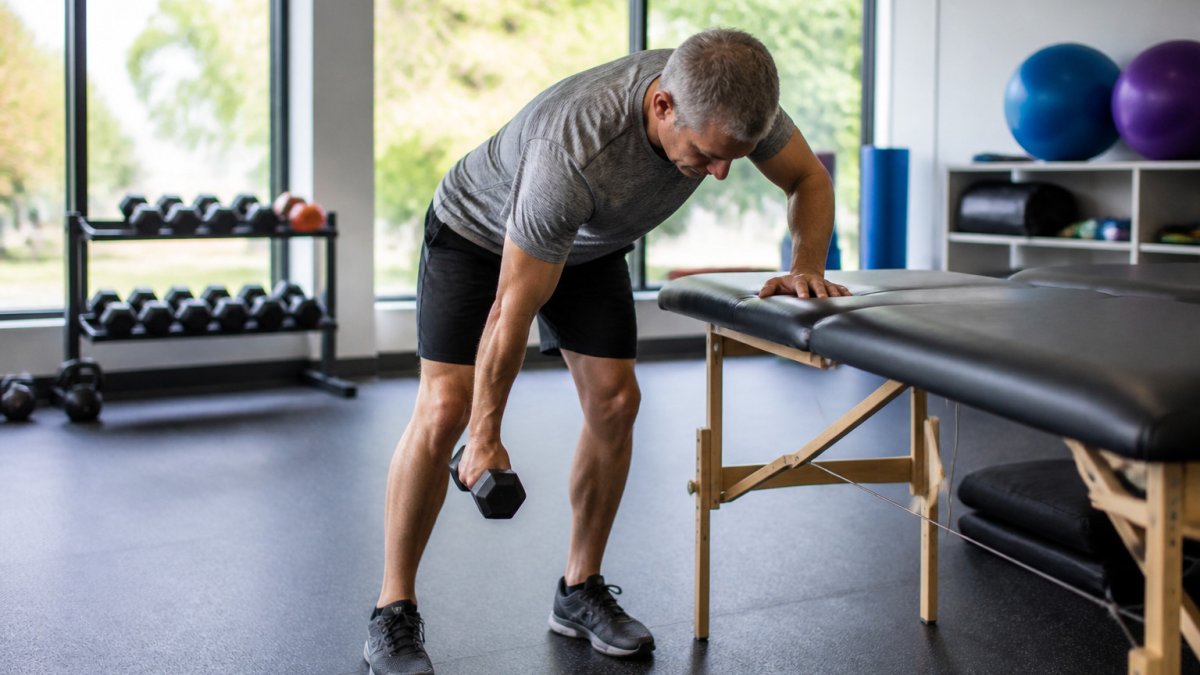 Diagram of pendulum stretches for rotator cuff tendinitis recovery in a physical therapy clinic setting
Early exercises focus on gentle range of motion. Pendulum swings, where you lean forward and let the arm hang and sway, loosen the joint without loading the tendon.
As pain improves, strengthening becomes the priority. Resistance band external rotation, scapular retraction, and controlled overhead progressions rebuild the muscles that stabilize the shoulder.
Consistency matters more than intensity. Short, regular sessions performed several days a week are a common approach.
5. Corticosteroid Injections, PRP, and SoftWave: How They Compare
When activity changes, medication, and exercise therapy do not provide enough relief, clinicians may discuss procedures. The options below are not interchangeable: they differ in what they are intended to do, how strong the supporting evidence is, and what they cannot fix. Use this comparison to ask better questions, not to self-select a treatment.
Corticosteroid injections
Purpose: Deliver a strong anti-inflammatory medication directly into the subacromial space or near the tendon to reduce pain quickly.
Typical role: Often used as a short-term bridge so a patient can participate in physical therapy. Relief commonly lasts weeks to a few months, but the injection does not repair tendon damage and does not address the biomechanical causes of the problem.
Limitations and cautions: Repeated injections are generally avoided because they may weaken tendon tissue and carry a small risk of infection.
Schedule Appointment →
Platelet-rich plasma (PRP)
Purpose: Use a concentration of the patient’s own platelets and growth factors, injected into or around the tendon, to support a healing response.
Typical role: Generally considered for chronic tendinopathy rather than a sudden flare. It is an office procedure that draws blood, spins it in a centrifuge, and reinjects the concentrated portion.
Limitations and cautions: The evidence for PRP in rotator cuff tendinopathy is mixed and still developing; different preparation methods and protocols make studies hard to compare. For a side-by-side look at how PRP differs from cortisone in healing, pain relief, and long-term recovery, review that comparison.
Purpose: Apply focused acoustic waves to soft tissue to stimulate a healing response and reduce pain.
Typical role: A non-invasive option performed in specialized clinics, usually as a series of sessions rather than a single treatment. It involves no incisions and no anesthesia in most protocols.
Limitations and cautions: Availability is limited, evidence for rotator cuff tendinopathy is not definitive, and protocols vary widely in energy level and number of sessions. Some patients report temporary soreness after treatment.
How to compare them
| Option |
Main goal |
Evidence strength |
Key limitation |
| Corticosteroid injection |
Rapid pain relief |
Well established for short-term relief |
Temporary; repeated use discouraged |
| PRP |
Support tendon healing |
Mixed and evolving |
Variable protocols; often not covered |
| SoftWave |
Stimulate healing non-invasively |
Limited and inconsistent |
Limited availability; protocol variation |
Pro Tip
A useful question for any clinician: “Is this treatment meant to reduce pain so I can do therapy, or is it meant to change the tendon itself?” The answer clarifies what to expect and when to reassess.
Before choosing, compare goals, risks, cost, and expected timelines with your clinician. You can also review the effectiveness, side effects, cost, and availability of a cortisone shot versus PRP injections to prepare your questions. Ask whether the treatment addresses the underlying tendon problem or only the pain, and what the next step will be if it does not help.
6. Rotator Cuff Tendinitis Recovery Timeline and a Staged Plan
This section organizes common approaches into a staged plan that describes what to do, when to progress, and when to stop and seek help. Timelines are general and vary with severity, age, work demands, and whether a tear is present.
Phase 1: Calm the symptoms (roughly 1 to 3 weeks)
Goal: Reduce pain and irritation enough to move the shoulder gently.
What to do:
- Modify or temporarily reduce aggravating activities rather than stopping all use of the arm.
- Use ice for 15 to 20 minutes after activity when symptoms flare. Before committing to a procedure, you can learn what happens at a PRP injection appointment.
- Use over-the-counter pain relief only as directed, and check with a clinician or pharmacist if you have health conditions or take other medicines.
- Begin gentle range-of-motion work such as pendulum swings and assisted elevation with a stick, staying within a pain-free range.
Move on when: Pain at rest is settling, you can perform daily tasks with less discomfort, and gentle motion does not cause sharp pain.
Phase 2: Rebuild motion and strength (roughly 3 to 12 weeks)
Goal: Restore full shoulder motion and begin loading the tendon and scapular muscles progressively.
What to do:
- Continue range-of-motion work until motion is near symmetrical with the other side.
- Add light resistance-band external rotation, scapular retraction, and rows.
- Progress load gradually; a common rule is to add resistance only when the current level is comfortable for several sessions.
- Expect mild soreness after exercise that settles within a day; sharp pain during exercise is a signal to back off.
Move on when: You have near-full motion, can perform light daily tasks without a flare, and band exercises feel controlled rather than painful.
Phase 3: Return to full activity (often 3 months or longer)
Goal: Rebuild capacity for work, sport, and overhead activity while reducing recurrence risk.
What to do:
- Increase overhead and loaded activity in small steps rather than all at once.
- Keep a maintenance strength program two to three times per week.
- Address workload factors such as desk setup, lifting technique, and training volume.
Move on when: You can meet your daily and recreational demands without a return of symptoms. Maintenance exercise should continue beyond this phase.
If a phase stalls
A plateau is common and is not automatically a reason to escalate. First check whether you are consistently doing the phase’s work, whether sleep and workload are undermining recovery, and whether pain is being masked by medication. If a phase has not progressed after a few weeks of consistent effort, or if symptoms worsen, a clinician can reassess the diagnosis and discuss whether imaging or a different treatment approach is appropriate.
Booking a Consultation to Map Your Next Steps
Shoulder pain that lingers despite careful self-care deserves a professional look. A consultation can help determine whether your symptoms reflect tendinitis, a tear, or another shoulder condition, and which options fit your situation. Schedule an appointment to talk through a plan that matches your goals, activity level, and recovery timeline.
Frequently Asked Questions
How do you heal tendonitis in your shoulder?
Most cases of rotator cuff tendinitis improve with conservative care. The usual approach combines reducing the movements that aggravate the shoulder, short-term pain relief, ice for flare-ups, and a progressive exercise program focused on range of motion and strength. Consistency matters more than intensity. Symptoms often ease over several weeks, but recovery can take longer if the tendon has been irritated for months. A clinician can confirm the diagnosis and adjust the plan to your specific case.
How do you hurt a rotator cuff?
Rotator cuff problems usually develop in one of two ways. Repetitive overhead motions, such as painting, swimming, or lifting at shoulder height, can gradually irritate the tendons over time. A sudden injury, such as falling onto an outstretched arm or lifting something too heavy, can cause an acute tear. Age also plays a role, since tendons lose some resilience with use over the years. Repeated strain from physically demanding work is a common contributor.
How long does rotator cuff tendonitis take to heal?
Recovery timelines vary. Mild tendinitis often improves within a few weeks once aggravating activities are reduced and a home program is started. More persistent cases can take several months, especially when the shoulder has been painful for a long time. Progress tends to be gradual, with pain decreasing first and strength returning afterward. If pain is not improving after several weeks of consistent care, schedule an evaluation to rule out a tear or other shoulder condition.
When should you see a doctor for shoulder pain?
See a doctor if shoulder pain is severe, lasts more than a few weeks despite home care, or wakes you at night. Seek prompt care if you notice sudden weakness, inability to lift the arm, a popping sensation followed by significant pain, numbness, or swelling and redness around the joint. These signs can point to a tear or another condition that needs a specific evaluation. A qualified provider can examine the shoulder and recommend the appropriate next step.