Last Updated: October 28, 2026
Quick Summary
Pain relief and joint strength are separate treatment targets, so match the option to the goal you are chasing first. Corticosteroid injections calm acute flares in days to 2 weeks but add no direct joint strength, while physical therapy builds durable strength and mobility over 6 to 12 weeks.
- Acute pain usually settles within weeks, while chronic pain is commonly defined as lasting beyond three months.
- Meaningful strength and mobility gains typically take 6 to 12 weeks of consistent work, with pain reduction often lagging.
- The most common mistake is quitting when pain drops, because pain relief arrives before strength gains.
- Nonsurgical options cannot reverse advanced bone-on-bone arthritis, though they can delay or avoid surgery for many patients.
- Regenerative treatments carry higher out-of-pocket cost and are frequently not covered by insurance.
Table of Contents
Why Pain Relief and Joint Strength Are Two Different Goals
Pain relief and joint strength are separate treatment targets. Relief from acute and chronic pain vs increased joint strength and mobility for surgery alternatives is really a question about which goal you are chasing first.
Pain relief and joint strength are different goals.
Nonsurgical Alternatives to Knee Replacement: What They Can and Cannot Do
Nonsurgical alternatives to knee replacement include medication and injections, physical therapy, regenerative treatments, and lifestyle changes. The useful question is not “which one works” but “which one works for the goal I am chasing right now”, pain relief or joint strength and mobility.
| Option |
Primary Goal |
Pain Relief Speed |
Strength/Mobility Gain |
Evidence Quality |
Best For |
| Corticosteroid injections |
Pain relief |
Days to 2 weeks |
None directly |
Well established |
Calming an acute flare; buying a window to start PT |
| Physical therapy |
Joint strength and mobility |
Slow (weeks) |
Strong, durable |
Well established |
Almost every patient; the foundation of any plan |
| Regenerative treatments (e.g., PRP) |
Function and pain reduction |
Weeks to months |
Indirect, via tissue support |
Mixed; varies by product and protocol |
Chronic joint pain, failed injections, moderate arthritis |
| Lifestyle changes (weight, load, sleep) |
Inflammation and load management |
Ongoing |
Supports strength work |
Well established |
Everyone, at every stage |
What these options cannot do is reverse advanced bone-on-bone arthritis. To see how our practice approaches regenerative medicine to help avoid knee surgery, explore what this treatment path offers. What they can do is delay or avoid surgery for many patients, especially when strength work starts early. The American Academy of Orthopaedic Surgeons treatment guidance frames surgery as a last step, not a first one.
How the choice changes by condition and joint
- Acute knee injury (sprain, meniscus tear without locking): protection and controlled loading first, then physical therapy within days to weeks. Injections are usually reserved for a flare that blocks rehab.
- Mild-to-moderate knee osteoarthritis: physical therapy and load management are the anchor. Corticosteroid injections can bridge a flare; regenerative treatments are a reasonable conversation if injections stop helping.
- Advanced knee osteoarthritis (bone-on-bone): nonsurgical care can still reduce pain and improve function, but the ceiling is lower. This is where the surgery conversation belongs. If you are unsure whether joint pain warrants a specialist visit, read how to know when to see an orthopedic surgeon.
- Shoulder pain (rotator cuff, impingement): range of motion and rotator cuff strengthening drive outcomes; injections can calm an acute flare but do not restore strength.
- Hip osteoarthritis: glute and core strengthening plus activity modification; injections for flares; surgery when night pain and walking tolerance collapse.
Risks, costs, and coverage, the part most guides skip
- Corticosteroid injections: low risk per injection, but repeated use carries risks to cartilage and tendon over time. Usually covered by insurance; out-of-pocket cost is typically modest.
- Physical therapy: low risk, but time-intensive. Coverage varies widely by plan; many patients face copays per visit and a visit cap.
- Regenerative treatments: higher out-of-pocket cost and frequently not covered by insurance. Evidence is mixed, and eligibility depends on the tissue and the severity of joint damage.
- Lifestyle changes: lowest risk and lowest cost, but the slowest to show measurable change.
If you are weighing these options against shots and surgery, our comparison of PRP vs. cortisone, physical therapy, and surgery lays out how each approach performs on pain, function, and recovery time.
Acute Pain vs Chronic Pain: Two Different Treatment Pathways
Acute pain and chronic pain need different first moves, and treating them the same way wastes time. Acute pain arrives after an injury and usually settles within weeks. Chronic pain persists past normal healing, commonly defined as pain lasting beyond three months, and is often driven by osteoarthritis and joint degeneration. The two pathways differ not just in what you do, but in what you measure and when.
Acute pain: protect, load, calm
- Timeline: most acute flares improve within days to a few weeks.
- What to measure: pain score at rest and with activity, swelling, and whether you can bear weight or move the joint through a usable range.
- What to avoid: prolonged complete rest, which stiffens the joint and slows recovery; and repeated injections that mask pain while the tissue is still healing.
- When to escalate: if pain or swelling worsens after 1-2 weeks, or if the joint locks, gives way, or cannot bear weight.
Chronic pain: load, strengthen, address the tissue
- Timeline: meaningful strength and mobility gains typically take 6-12 weeks of consistent work; pain reduction often lags behind function gains.
- What to measure: pain score, range of motion in degrees, walking tolerance (blocks or minutes), sit-to-stand repetitions, and single-leg balance time.
- What to avoid: quitting when pain drops, the most common mistake, because pain relief arrives before strength gains.
- When to escalate: when pain limits daily life despite months of conservative care, or when night pain or giving way puts you at risk of falls. (Source: National Institutes of Health (NIH) on osteoarthritis)
The direct comparison: pain relief vs strength and mobility
| Goal |
Fastest options |
Most durable options |
Realistic timeline |
| Pain relief (acute) |
Corticosteroid injection, relative rest, cold/heat |
Physical therapy to prevent recurrence |
Days to 2 weeks |
| Pain relief (chronic) |
Injection bridge, regenerative treatment |
Strengthening, load management |
Weeks to months |
| Joint strength |
Physical therapy, progressive loading |
Physical therapy plus lifestyle change |
6-12 weeks to measurable gain |
| Mobility / range of motion |
Physical therapy, daily range work |
Consistent home program |
4-12 weeks |
Watch Out
Pain relief is a short game; joint strength is a long game. A joint that feels better but stays weak tends to hurt again. Plan for both, and measure both.
Physical Therapy for Knee Pain and Mobility: The Strength Foundation
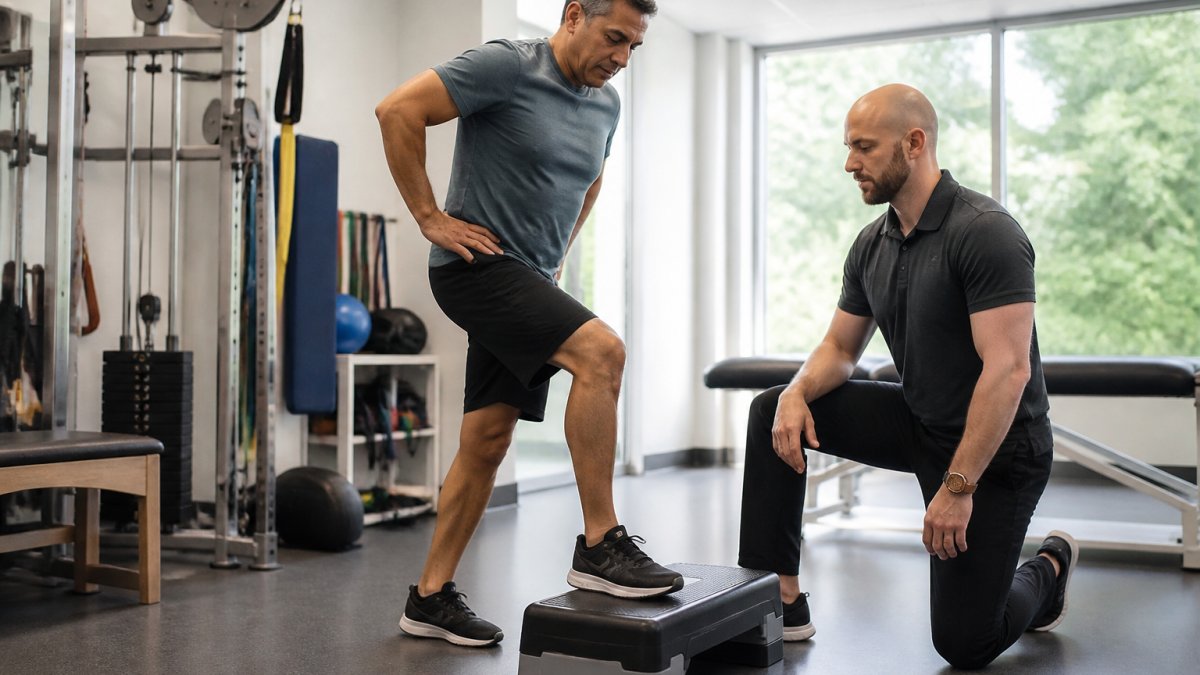 Physical therapist guiding a patient through single-leg step-downs to improve joint strength in a clinic.
- Two to three sessions of targeted strengthening, built around slow, controlled reps
- Daily range of motion work, even on rest days
- Balance and single-leg work twice weekly
- Gradual load increases, never jumps
The most common mistake is quitting when pain drops. Pain relief comes before strength gains, so people stop right when the useful part begins. Rehabilitation takes months, not weeks. Pairing it with regenerative care is where the two approaches reinforce each other, which recent clinical commentary on rehab and biologics explores in more detail. See how physical rehabilitation and regenerative medicine pair in practice.
Regenerative Medicine for Chronic Knee Pain: What the Evidence Supports
OPDAHL Regenerative Medicine uses dynamic ultrasound as an advanced diagnostic tool to help identify the root causes of discomfort.
Schedule Appointment →
If you are weighing these options against shots and surgery, our comparison of PRP vs. cortisone, physical therapy, and surgery lays out how each approach performs on pain, function, and recovery time.
When to Consider Knee Replacement Surgery
The middle ground most people never hear about: you can pursue joint strength and mobility work while keeping surgery as a backup plan, not a first resort.
Schedule an Evaluation at OPDAHL Regenerative Medicine
OPDAHL Regenerative Medicine offers patient-centered, non-surgical spine and joint care for people seeking relief from acute and chronic pain.
At OPDAHL Regenerative Medicine, we use advanced diagnostic tools including dynamic ultrasound as part of our patient-centered approach to spine and joint care. Our focus includes preventative measures and non-surgical therapies for people seeking relief from acute and chronic pain. Learn more about our knee pain treatment options and what an evaluation involves.
Frequently Asked Questions
What nonsurgical alternatives to knee replacement can help relieve pain?
Nonsurgical options for knee pain can include different approaches. The appropriate options depend on an individual’s circumstances and should be discussed with a qualified professional.
Can physical therapy improve knee strength and mobility enough to delay surgery?
Whether physical therapy is appropriate and what it may accomplish depend on the individual. Discuss treatment options with a qualified professional.
Can regenerative treatments help with chronic knee pain?
OPDAHL Regenerative Medicine offers non-surgical therapies for people seeking relief from acute and chronic pain. The appropriate options depend on an individual’s circumstances and should be discussed with a qualified professional.
How long should you try nonsurgical knee treatments before considering surgery?
The appropriate timing for considering surgery depends on individual circumstances. Discuss options and timing with a qualified professional.
Joint pain rarely improves by waiting, and the window for conservative care is widest before structural damage advances. OPDAHL Regenerative Medicine offers dynamic ultrasound diagnostics, a patient-centered approach to spine and joint care, and treatment plans built around restoring joint strength and mobility rather than masking symptoms. Get started with OPDAHL Regenerative Medicine and schedule an evaluation to find out what your knee can still do without surgery.