Quick Summary
Spinal stenosis treatment usually starts without surgery, using physical therapy, activity changes, and medications, with epidural steroid injections as an option for persistent nerve pain. Surgery is generally considered when symptoms are severe, progressive, or no longer controlled by conservative care. The right approach depends on where the narrowing is and which symptoms it causes.
- Nonsurgical treatments are usually tried first for spinal stenosis.
- Physical therapy can build strength, mobility, and body mechanics over weeks to months.
- Backward bending, or extension, often narrows the canal further and can increase leg pain.
- Surgery is considered for progressive weakness, bladder or bowel control loss, or worsening numbness.
- Recovery timelines are averages, so ask your surgeon which milestones would signal a problem.
Ready to explore your spine care options?OPDAHL Regenerative Medicine offers nonsurgical spine and joint care focused on lasting recovery.
Schedule Your Consultation
Table of Contents
What Spinal Stenosis Is and Why Treatment Choice Depends on Symptoms
Last Updated: November 8, 2026
Spinal stenosis is the narrowing of the spinal canal, the passage that carries the spinal cord and nerve roots (Spinal Stenosis Symptoms, Causes, & Risk Factors). When that space tightens, it can press on nerves and cause pain, numbness, tingling, or weakness. Many people first notice it as trouble walking or standing for long periods. (Source: National Institute of Arthritis and Musculoskeletal and Skin Diseases (NIAMS))
The right spinal stenosis treatment option depends largely on where the narrowing is and what symptoms it produces. Two patients with the same diagnosis can need very different plans. A useful starting point is an open discussion of your symptoms, your daily activities, and your goals with a qualified clinician.
Cervical vs lumbar stenosis: how location changes symptoms
Cervical stenosis affects the neck. It often causes pain or stiffness in the neck, along with arm or hand symptoms such as numbness, tingling, or clumsiness with fine tasks. Lumbar stenosis affects the lower back. Its hallmark is leg pain, heaviness, or cramping that worsens with standing or walking and eases when you sit or lean forward.
This difference matters for treatment. Lumbar symptoms often respond well to activity changes, physical therapy, and targeted medications, while cervical symptoms may call for closer monitoring of nerve function. Any sudden weakness, loss of bladder or bowel control, or rapidly worsening numbness needs prompt medical attention.
Side-by-Side Comparison of Spinal Stenosis Treatment Options
Most people weigh nonsurgical care against surgery, but the more useful comparison is across purpose, likely benefit, limitations, recovery, and who each option suits. The table below summarizes how the main spinal stenosis treatment options typically compare. Outcomes and suitability vary, so a qualified clinician should guide the final choice.
| Option | Primary Purpose | Likely Benefit | Key Limitations and Risks | Typical Recovery or Time to Effect | Best Suited For |
|---|
| Physical therapy and exercise | Build strength, mobility, and body mechanics | Modest to moderate symptom improvement over weeks; low risk | Requires consistent effort; progress can plateau; not a fix for the narrowing | Weeks to months of consistent practice | Mild to moderate symptoms; first-line care for most patients |
| Activity modification | Reduce symptom triggers | Simple, low cost, immediate symptom control | May limit favorite activities; does not change the underlying narrowing | Immediate, but ongoing | Symptoms clearly tied to standing, walking, or extension |
| Oral medications (NSAIDs, acetaminophen, neuropathic agents) | Reduce pain and inflammation | Fast symptom relief for some; neuropathic agents may help nerve-related pain | GI, kidney, and cardiovascular risks with NSAIDs; drowsiness or dizziness with neuropathic agents; not a fix for the narrowing | Hours to days for NSAIDs; weeks for neuropathic agents to reach full effect | Short-term relief while other care takes effect |
| Epidural steroid injection | Reduce inflammation around affected nerves | Can reduce nerve-related leg or arm pain for weeks to months | Relief is often temporary; risks include infection, bleeding, dural puncture, and transient blood sugar elevation | Days to two weeks for full effect; relief often fades | Persistent nerve-related pain after conservative care |
| Surgical decompression (laminectomy, laminotomy) | Create more room for nerves | Durable relief for many patients with significant symptoms | Surgical risks include infection, bleeding, dural tear, and, rarely, nerve injury; recovery takes weeks | Hospital stay often same day to a few days; return to light activity in weeks; full recovery in months | Severe, progressive, or persistent symptoms despite conservative care |
| Spinal fusion | Stabilize the spine when decompression alone would be unstable | Addresses instability alongside stenosis | Longer recovery; adjacent-segment degeneration; higher complication profile than decompression alone | Months to full recovery; activity restrictions longer than decompression alone | Stenosis with deformity, spondylolisthesis, or instability |
Nonsurgical treatments are usually tried first. Surgery is generally considered when symptoms are severe, progressive, or no longer controlled by conservative care. A practical escalation framework helps: try conservative care for a defined period, reassess function and pain at set intervals, and discuss surgery if symptoms worsen, nerve function declines, or daily activities become unmanageable.
Spinal Stenosis Treatment Without Surgery: Physical Therapy, Exercise, and Activity Changes
Physical therapy is often a first step in nonsurgical care, and a therapist can help build core strength, improve posture, and increase flexibility. Many patients find that flexed-forward positions, such as leaning on a shopping cart, ease their symptoms, so a therapist may teach positions that reduce pressure on the nerves.
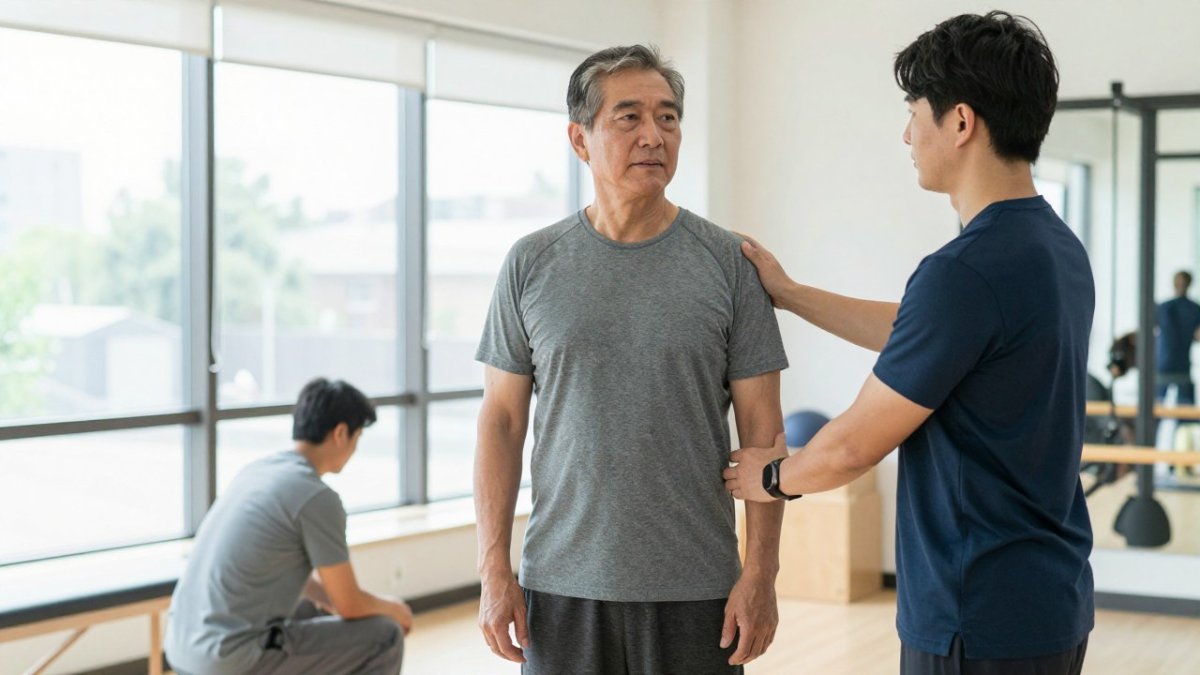 Physical therapist guiding a patient through a spinal stenosis treatment mobility exercise in a bright clinic
Activity changes matter too. Breaking up long walks, using a stool when standing, and choosing bicycling or walking with rest breaks can help you stay active while managing symptoms. For more on nonsurgical back pain care, see our overview of nonsurgical back pain treatments.
Spinal stenosis exercises that help and which to avoid
Gentle, consistent exercise generally helps. Stationary cycling, walking with rest periods, and water-based exercise are commonly recommended because they keep you moving without heavy spinal loading. Core and hip strengthening exercises, guided by a therapist, can also support better mechanics.
Some movements tend to aggravate symptoms. Backward bending, or extension, often narrows the canal further and can increase leg pain. High-impact activities and heavy lifting may also worsen symptoms for some people. Ask your clinician which exercises fit your condition before starting a new routine.
Medications and Injections: The Best Painkiller for Spinal Stenosis and Its Limits
Over-the-counter and prescription anti-inflammatory medications are commonly used to control pain. There is no single “best” painkiller for every patient. The right choice depends on your health history, other medications, and how your symptoms respond. Medication can ease discomfort, but it does not change the narrowing itself. (Source: Mayo Clinic’s comprehensive guide)
Epidural steroid injections deliver anti-inflammatory medication near the affected nerves. Our guide on what an epidural steroid injection involves and who is a good candidate explains what to expect and what to consider if an injection has not worked. Relief is often temporary. Discuss the risks, benefits, and expected duration of relief with your clinician.
The Newest Treatment for Spinal Stenosis and How It Compares
Minimally invasive surgical techniques are an evolving area of spinal care. One example is endoscopic spine surgery, which uses a small camera and instruments through a narrow incision. Providers describe it as a less invasive way to decompress the nerves. Researchers continue to study how these newer approaches compare with traditional surgery and with nonsurgical care over the long term.
Newer does not automatically mean better for every patient. Candidacy, available evidence, and recovery expectations all differ, so ask a spine specialist how any new technique compares with proven options for your specific symptoms.
When Surgery Is Considered and What Recovery Looks Like
Surgery is usually considered when symptoms are severe, worsening, or do not respond to several months of nonsurgical care. The clearest triggers are progressive weakness, loss of bladder or bowel control, or rapidly worsening numbness, which need prompt medical attention. For less urgent cases, a common pattern is to try conservative care for a defined period, reassess function and pain at set intervals, and discuss surgery if daily activities become unmanageable or nerve function declines.
Common procedures aim to relieve pressure on the nerves. A laminectomy removes bone and ligament to widen the canal. A laminotomy removes a smaller portion of bone. Spinal fusion is added when decompression alone would leave the spine unstable, such as with spondylolisthesis or deformity. Minimally invasive and endoscopic techniques use smaller incisions and are evolving, but candidacy and long-term evidence differ from traditional surgery.
Recovery time varies by procedure, age, overall health, and activity level. Fusion typically involves longer activity restrictions and a longer return to full activity. Realistic expectations matter, since outcomes vary and relief can be partial.
Before deciding, many patients explore nonsurgical alternatives first. Our guide on non-surgical treatments for a herniated disc explains conservative options in more detail. If you are weighing a back surgery decision, consider learning about why it is worth thinking carefully before back surgery, including risks, complications, and recovery costs.
Watch out: recovery timelines are averages, not promises, plan for variability and ask your surgeon what specific milestones would signal a problem.
Choosing Your Next Step: Booking a Spine Evaluation
Spinal stenosis symptoms deserve a proper evaluation by a qualified clinician. Your results and symptoms will guide which treatment options fit your situation.
You can learn more about our spine and back pain care and schedule an appointment to discuss your options.
Get started with OPDAHL Regenerative Medicine and explore a nonsurgical plan for your spine. Our team focuses on preventive measures and alternatives to surgery or heavy pain medication, supporting lasting recovery and mobility.
Frequently Asked Questions
Does spinal stenosis get better?
Symptoms of spinal stenosis often change over time. Some people have long periods of stable symptoms, while others see gradual worsening, especially if walking becomes harder or weakness develops. Many people manage symptoms well with conservative care such as physical therapy, activity changes, and medication. Because the course varies, a clinician can help you track symptoms and decide when to reassess your treatment plan. Sudden loss of bladder or bowel control, or rapidly worsening leg weakness, needs urgent medical attention.
What is the newest treatment for spinal stenosis?
Newer options include minimally invasive surgical approaches such as endoscopic spine surgery, which uses small incisions and a camera to decompress the spinal canal. Evidence for newer approaches is still developing and results vary. A newer option is not automatically better than established care. Ask a qualified spine specialist about the evidence, the risks, and whether the approach fits your stenosis location and symptoms.
What is the best painkiller for spinal stenosis?
No single painkiller is best for everyone with spinal stenosis. Treatment decisions depend on symptoms and health history, so review medication options with your clinician. These drugs carry risks, including stomach bleeding and kidney or heart effects, and may not be appropriate for people with certain conditions. Always review medication options with your doctor or pharmacist before starting or combining them.
How do you treat spinal stenosis without surgery?
Nonsurgical care for spinal stenosis may include physical therapy, activity modification, and medication for pain and inflammation, and outcomes vary. Some people eventually need further evaluation. A spine evaluation can help determine which conservative options are reasonable for your specific symptoms.