Everyone gets a headache now and then. But when it’s not “now and then” — when it’s every week, or every few days, or it never fully seems to go away — that’s a different problem, and it deserves a different answer than another round of ibuprofen.
Chronic headaches and migraines affect millions of Americans, and migraine alone impacts an estimated 37 to 39 million people in the U.S. But here’s what often gets missed: not every headache is a migraine, and treating the wrong type of headache the wrong way is a big reason so many people feel stuck.
In this guide, we’ll break down the three most common headache types, what typically causes each one, and the full range of treatment options — including regenerative approaches like trigger point injections, occipital nerve blocks, and prolotherapy that target the actual source of the pain rather than just numbing it.
The Three Most Common Types of Chronic Headaches
Before you can treat a headache effectively, you need to know what kind you’re dealing with. Most chronic headaches fall into one of three categories.
Migraine
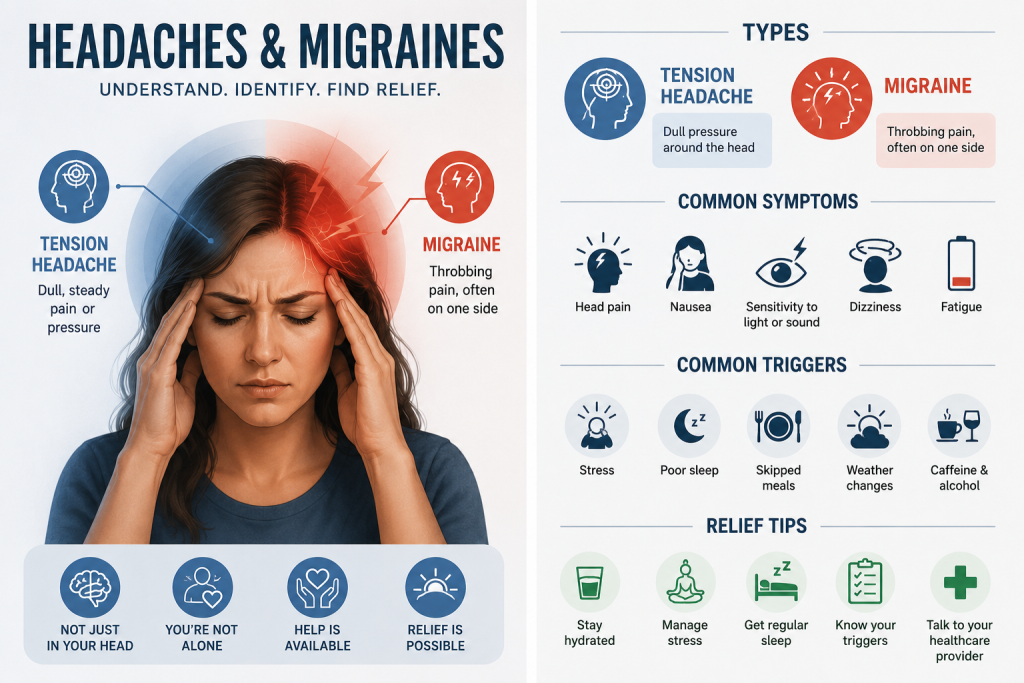
Migraine is a neurological condition, not just “a bad headache.” It typically causes throbbing or pulsing pain, often on one side of the head, and is frequently accompanied by:
- Nausea or vomiting
- Sensitivity to light and sound
- Visual disturbances (aura), such as flashing lights, blind spots, or zigzag patterns
- Sensory changes like tingling or difficulty speaking
About 2% of the U.S. population experiences chronic migraine specifically, meaning 15 or more headache days per month for at least three months, with at least 8 of those days having migraine features.
Tension-Type Headache
Tension headaches are the most common headache type overall. They typically feel like a dull, constant pressure or tightness — often described as a “band around the head” — and are closely linked to muscle tension in the neck and shoulders.
Cervicogenic Headache
This is the type most people have never heard of, even though it’s common. Cervicogenic headaches originate from problems in the neck — the joints, muscles, ligaments, or nerves — and radiate up into the head. Unlike migraine, cervicogenic headaches typically:
- Occur on one side and stay on that side
- Worsen with certain neck movements or positions
- Come with reduced neck range of motion or stiffness
- Do NOT typically include nausea, light sensitivity, or aura
Cervicogenic headaches are frequently caused by cervical arthritis (cervical spondylosis), disc degeneration, whiplash, poor posture, or old neck injuries that were never fully addressed.
What Causes Chronic Headaches and Migraines?
Causes vary significantly by headache type:
Migraine triggers commonly include hormonal changes, stress, certain foods (aged cheese, alcohol, caffeine withdrawal), changes in sleep patterns, and sensory triggers like bright lights or strong smells. Migraine also has a strong genetic component.
Tension headache causes are usually tied to muscle tension from stress, poor posture (especially “tech neck” from looking down at phones or screens), eye strain, or jaw clenching.
Cervicogenic headache causes are structural: arthritis in the cervical spine, a bulging or herniated disc in the neck, whiplash from an auto accident, or chronic postural strain that irritates the nerves exiting the upper spine. When those upper cervical joints become irritated or restricted, the pain refers upward into the head, scalp, and sometimes behind the eyes.
This distinction matters because it changes the treatment plan. A migraine medication won’t fix an irritated cervical joint, and neck-focused treatment won’t stop a true migraine.
How Are Chronic Headaches Diagnosed?
An accurate diagnosis starts with a detailed history and physical exam, including:
- A description of pain location, quality (throbbing vs. dull vs. sharp), and triggers
- Assessment of neck range of motion, muscle tension, and joint tenderness
- A review of associated symptoms (nausea, light sensitivity, aura) that point toward migraine versus a neck-driven cause
- In some cases, imaging such as X-ray, MRI, or diagnostic ultrasound to evaluate the cervical spine for arthritis, disc issues, or nerve irritation
Because cervicogenic and tension headaches are often mistaken for migraines (and vice versa), getting the type right is the single most important step before starting treatment.
Conventional Treatment Options for Chronic Headaches
Medications
- Over-the-counter pain relievers for occasional, mild headaches
- Triptans and CGRP inhibitors, prescribed specifically for migraine
- Muscle relaxants, often used for tension-type headaches
- Preventive medications, including certain blood pressure medications, antidepressants, and anti-seizure drugs used off-label for frequent migraine
Physical Therapy
Especially effective for cervicogenic and tension headaches, physical therapy addresses posture, neck mobility, and muscle tightness that may be feeding the pain cycle.
Lifestyle and Trigger Management
Sleep regulation, hydration, stress management, and identifying/avoiding personal migraine triggers remain foundational, particularly for migraine sufferers.
The limitation with most of these approaches: they either manage symptoms after they start (medication) or address general contributing factors (lifestyle) without directly targeting a structural source of pain, like an irritated cervical joint or a tight, inflamed muscle trigger point. That’s where regenerative and interventional approaches come in.
Can Regenerative Medicine Help Chronic Headaches and Migraines?
For headaches with a clear musculoskeletal or neck-driven component — which describes a large share of tension and cervicogenic headaches, and even some migraines complicated by neck tension — regenerative and targeted injection therapies aim at the actual source rather than just quieting the pain signal.
Trigger Point Injections
Trigger points are tight, irritated knots in muscle tissue, commonly in the neck, shoulders, and upper back, that can refer pain into the head. Treatment involves delivering a small amount of anesthetic (sometimes combined with other solutions) directly into these knots to release the tension and interrupt the pain-referral pattern. Research on chronic migraine patients with cervical myofascial trigger points has shown that treating these trigger points can meaningfully reduce headache frequency and severity.
Occipital Nerve Blocks
The occipital nerves run from the top of the spine up through the scalp. When irritated, they’re a common driver of pain at the base of the skull that radiates forward. Occipital nerve blocks — an injection of anesthetic (often combined with an anti-inflammatory) near these nerves — have shown benefit across multiple headache types, including cervicogenic headache, occipital neuralgia, and migraine, with studies reporting sustained relief for many patients for weeks to months at a time.
Prolotherapy for Cervical Instability
When chronic neck instability or ligament laxity is contributing to recurring cervicogenic headaches, prolotherapy can be used to strengthen the ligaments supporting the cervical spine. By stimulating the body’s natural repair response in these connective tissues, the goal is more stable, better-supported neck joints, which means less nerve irritation and fewer headaches over time.
PRP for Neck-Driven Headaches
For headaches tied to underlying cervical joint degeneration or soft tissue injury (including whiplash from auto accidents), platelet-rich plasma injections may be used alongside other regenerative treatments to support healing in the affected cervical structures, addressing one of the root drivers of recurring headache pain.
It’s worth being clear about scope here: regenerative and injection-based treatments are most effective for headaches with an identifiable musculoskeletal or neck-driven component. True migraine, which is a neurological condition, is typically managed primarily through neurology-guided medication and trigger management — though patients with both migraine and a coexisting neck problem often see meaningful improvement when the neck component is treated directly.

Is My Headache Coming From My Neck?
A few signs suggest your headaches may have a cervicogenic component worth investigating:
- Your headache consistently starts at the base of your skull or in your neck
- Turning or tilting your head changes your pain
- You have neck stiffness, popping, or reduced range of motion
- Your headaches began or worsened after a car accident, fall, or neck injury
- You don’t experience the nausea, light sensitivity, or aura typical of migraine
If several of these sound familiar, it may be worth having your cervical spine evaluated specifically, rather than only treating the headache itself.
Self-Care Tips for Managing Chronic Headaches
- Track your headaches. Note timing, triggers, and associated symptoms — this alone often helps identify the headache type.
- Address posture. Especially for screen-heavy days; forward head posture puts ongoing strain on the same cervical structures linked to cervicogenic headaches.
- Stay hydrated and keep a consistent sleep schedule. Both dehydration and irregular sleep are common headache triggers.
- Manage stress. Muscle tension from chronic stress is a major contributor to tension-type headaches.
- Don’t just push through it. Frequent headaches that keep getting treated with over-the-counter medication alone tend to persist because the underlying cause isn’t being addressed.
When Should You See a Doctor for Headaches?
Most headaches aren’t an emergency, but you should seek evaluation if you experience:
- Headaches occurring more than once or twice a week
- Headaches that are getting more frequent or severe over time
- A headache pattern that started after a car accident, fall, or head/neck injury
- Neck stiffness or reduced range of motion alongside your headaches
- Any sudden, “worst headache of your life” pain, or a headache with fever, confusion, vision loss, or weakness — these warrant immediate emergency care
Why Choose Opdahl Regenerative Medicine for Headache and Migraine Treatment
At Opdahl Regenerative Medicine, we don’t treat every headache the same way, because they’re not the same problem. Our team evaluates whether your headaches have a cervical, muscular, or neurological driver, using thorough assessment and diagnostic ultrasound, then builds a treatment plan around the actual source, whether that means trigger point injections, occipital nerve blocks, prolotherapy, or PRP for an underlying neck issue.
We treat patients across Southwest Washington and the Portland metro area at our Battle Ground, Vancouver (Hazel Dell), East Vancouver, Woodland, and Gresham locations.
If chronic headaches or migraines have been running your schedule instead of the other way around, let’s find out what’s actually causing them.
Request an Appointment Today
Frequently Asked Questions
What’s the difference between a migraine and a cervicogenic headache? Migraine is a neurological condition often accompanied by nausea, light and sound sensitivity, and sometimes visual aura. Cervicogenic headaches originate from the neck, typically stay on one side, worsen with certain neck movements, and don’t usually come with the nausea or light sensitivity seen in migraine.
Can neck problems really cause headaches? Yes. The upper cervical spine houses nerves that refer pain into the scalp, forehead, and area behind the eyes. Arthritis, disc issues, whiplash, and chronic muscle tension in the neck are well-documented causes of headache pain, a pattern known as cervicogenic headache.
Do trigger point injections hurt? Most patients describe brief, mild discomfort during the injection itself, followed by noticeable muscle relaxation in the treated area. Any soreness afterward is typically mild and short-lived.
How long does relief from an occipital nerve block last? It varies by patient and underlying cause, but studies have shown benefit lasting anywhere from several weeks to a few months per treatment, with many patients receiving repeat treatments as part of an ongoing plan.
Can regenerative medicine cure migraines? Not exactly. Migraine is a neurological condition best managed through medication and trigger management, typically with a neurologist involved. However, if neck tension or cervical joint issues are contributing to or worsening your migraine pattern, treating that component can meaningfully reduce frequency and severity for many patients.
How do I know if my headaches are from my neck or a true migraine? Key clues include whether your pain changes with neck movement, whether you have visible neck stiffness or reduced range of motion, and whether you experience migraine-specific symptoms like aura, nausea, or light sensitivity. A proper evaluation, including a hands-on neck assessment, is the most reliable way to tell the difference.
This article is for informational purposes only and is not a substitute for professional medical advice, diagnosis, or treatment. Always consult a qualified healthcare provider regarding your specific condition. Seek immediate medical attention for sudden, severe headaches or headaches accompanied by fever, confusion, vision loss, or weakness.