Last Updated: November 5, 2026
Quick Summary
Regenerative medicine for joints uses your body’s own biological materials, such as platelets or cells, to support repair of damaged cartilage, tendons, and other joint tissues. These treatments are generally considered a non-surgical option for chronic joint pain, and results vary widely by treatment type and joint condition. A consultation usually starts by identifying what drives the discomfort.
- PRP has the largest body of clinical study among regenerative joint injections, with mixed findings.
- Evidence suggests PRP may perform best in mild to moderate osteoarthritis rather than advanced disease.
- No injectable treatment has been shown in high-quality trials to regrow hyaline cartilage.
- Regenerative joint injections are generally paid out of pocket and many plans treat them as investigational.
- Ask the clinic for the product’s manufacturer, FDA regulatory pathway, and whether it operates under a registered trial.
Table of Contents
What Regenerative Medicine for Joints Involves
Regenerative medicine for joints uses the body’s own biological materials, such as platelets or cells, to support repair of damaged cartilage, tendons, and other joint tissues. These are generally considered a non-surgical option for chronic joint pain, and a consultation usually starts by identifying what drives the discomfort. (Source: mixed findings for PRP in knee osteoarthritis)
The field covers several distinct approaches that are not interchangeable. Each draws on a different cell or tissue source and carries its own evidence base, cost structure, and regulatory status. Understanding those differences is the first step toward a realistic decision.
How Regenerative Treatments May Support Tissue Repair
Joints break down when their repair systems cannot keep pace with wear, injury, or inflammation. Regenerative treatments aim to deliver concentrated growth factors or cells to the damaged area, where they may support the body’s repair response and reduce inflammation. The theory is plausible, but the evidence is more modest, as covered below.
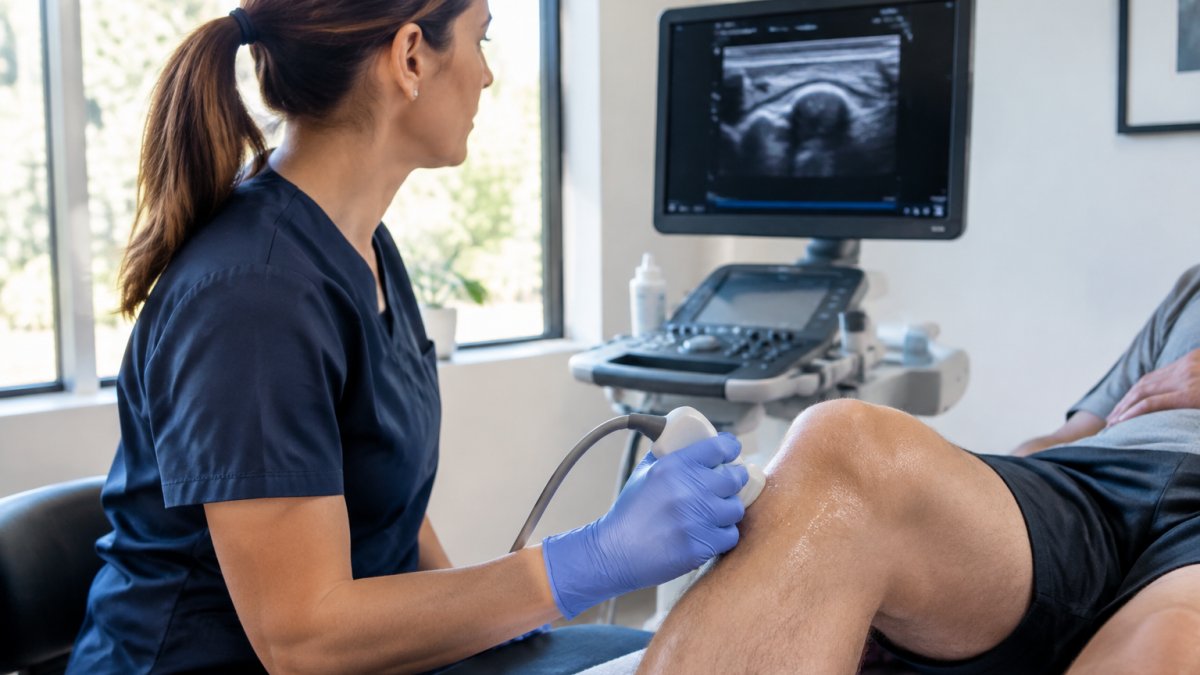 Clinician using an ultrasound probe on a patient’s knee during a regenerative medicine joint treatment
Does Regenerative Knee Therapy Work? What the Evidence Shows
The honest answer is that results vary widely by treatment type and by joint condition, and high-quality evidence remains limited for several approaches.
That gap between marketing claims and clinical evidence is where most confusion starts.
The more useful question is not “does regenerative medicine work?” but “which regenerative treatment, for which joint, at which stage of disease?” Treating the field as one intervention is where most public discussion goes wrong.
Evidence by Treatment Type
Platelet-rich plasma (PRP). PRP has the largest body of clinical study among regenerative joint injections, and findings are mixed.
Bone marrow-derived products. Bone marrow aspirate concentrate (BMAC) contains mesenchymal stem cells along with platelets and growth factors. Its evidence base is smaller than PRP’s.
Fat-derived (adipose) products. Adipose tissue yields a high number of cells per volume, but evidence for joint injections is the thinnest of the three main categories. Most published work is early-phase, uncontrolled, or focused on safety rather than efficacy. Regulatory status is also more complicated than many patients realize, because processing method determines whether a product is treated as a drug, a biologic, or something outside the current enforcement framework.
Other cell-based and biologic approaches. Amniotic membrane and umbilical cord products are marketed heavily but generally lack randomized evidence for joint pain, and their regulatory status has drawn scrutiny because many are allograft tissue rather than live cell therapies.
Evidence by Joint Condition
Knee osteoarthritis. This is the most studied indication.
Hip osteoarthritis. Evidence is much thinner than for the knee.
Shoulder, elbow, and tendon conditions. Rotator cuff tendinopathy, lateral epicondylitis, and plantar fasciitis have been studied more than joint cartilage itself, with mixed but generally favorable signals for PRP versus corticosteroid in some trials.
Advanced “bone-on-bone” disease. Across treatment types, evidence of meaningful benefit in severe osteoarthritis is weak.
What This Means for a Decision
Evidence quality is not uniform, and a clinic presenting all regenerative injections as equivalent is not giving you the information you need. Ask which specific product is proposed, what published evidence exists for that product in your joint and at your disease stage, and what outcome measures a clinic tracks. For the mechanism behind PRP specifically, see how PRP works.
The article grades each main regenerative approach by strength of evidence and typical findings.
| Treatment |
Evidence base |
What studies suggest |
| Platelet-rich plasma (PRP) |
Largest body of clinical study |
Modest average pain and function gains in mild to moderate knee osteoarthritis |
| Bone marrow aspirate concentrate (BMAC) |
Smaller than PRP’s |
Possible short- to medium-term benefits; small samples, varied preparation |
| Fat-derived (adipose) products |
Thinnest of the three main categories |
Mostly early-phase or uncontrolled; focused on safety |
| Amniotic and umbilical cord products |
Generally lack randomized evidence |
Marketed heavily; regulatory status has drawn scrutiny |
| Cultured stem cell products |
Largely unavailable outside clinical trials |
Not part of routine U.S. practice |
Regenerative Medicine for Knee Arthritis: Who It May Help
Candidacy matters more than the treatment name. Regenerative medicine for knee arthritis tends to suit people with mild to moderate osteoarthritis, intact joint structure, and pain that has not responded well to conservative care.
Patient eligibility comes down to a clinical exam, imaging, and an honest conversation about goals. If you are wondering whether you qualify, understanding who makes a good PRP candidate walks through the factors we weigh.
PRP Injections for Knee Arthritis: How Platelet-Rich Plasma Works
PRP injections for knee arthritis use a sample of your own blood, spun in a centrifuge to concentrate platelets and growth factors, then injected into the joint. Because the material is autologous, the main risks are injection-site soreness and a small infection risk rather than allergic reaction.
Schedule Appointment →
A common mistake is expecting PRP to behave like a steroid shot. It does not. Relief, when it comes, typically builds over weeks rather than days, and response is not guaranteed. Insurance coverage is limited, and most plans treat PRP as elective.
Knee Cartilage Regeneration Injection: What It Can and Cannot Do
A knee cartilage regeneration injection aims to support tissue repair, but no injection currently available in routine practice reliably regrows cartilage. What these treatments may do is reduce inflammation, improve joint function, and ease pain enough to support movement and strengthening. Cartilage has a limited blood supply, which is generally associated with slow and incomplete repair.
Be skeptical of any clinic that guarantees new cartilage. Ask what outcome measures a clinic tracks and how it defines success.
Risks, Costs, and Questions to Ask Before Treatment
Regenerative joint injections are generally low-risk compared with surgery, but the risks are real and the financial and regulatory picture is more complicated than most clinic websites suggest. This section covers what can go wrong, what you will likely pay, how coverage works, and how to verify that what you are offered is legally and appropriately marketed.
Risks and Side Effects
Common and expected: soreness, swelling, and a temporary flare of pain at the injection site for a few days after treatment. These usually resolve without intervention.
Less common but more serious: infection at the injection site, bleeding, and injury to surrounding structures.
For products that use your own tissue, PRP, bone marrow, fat, allergic reaction is not a major concern because the material is autologous.
What Treatment Typically Costs
Regenerative joint injections are generally paid out of pocket. Pricing depends on quantity, dates, and delivery-style variables such as the clinic, product, and number of joints treated, so request a current quote from the clinic for accurate figures.
Ask the clinic for a written estimate that itemizes the procedure, any harvest or processing fee, imaging, and follow-up. Confirm whether a second injection is included or billed separately, and ask about its refund or revision policy.
Insurance Coverage
Coverage for regenerative joint injections varies, and many plans treat them as investigational for joint pain. Some plans may cover PRP in narrow circumstances, and coverage rules vary by insurer and by plan. Before treatment, call your insurer with the specific procedure code the clinic will bill and ask for a written coverage determination. Do not rely on a clinic’s assurance that insurance will pay.
Regulatory Status: What You Should Verify
The regulatory picture depends on the product, not the clinic’s marketing category. Regenerative products may be regulated in different ways depending on their type and processing. Check the FDA’s website for current guidance and public warnings about regenerative products.
A practical verification step: ask for the product’s manufacturer, its FDA regulatory pathway, and whether the clinic is operating under an investigational new drug application or a registered trial. If the answer is vague, treat that as a signal.
Questions to Bring to a Consultation
- What specific product are you proposing, and how is it prepared?
- What does the published evidence show for this product in my joint and at my disease stage?
- Who performs the procedure, and what training and credentials do they hold?
- Is ultrasound guidance used, and who performs the injection?
- What is the total cost, itemized, and what does it include?
- Is a second injection included, and what is the policy if the first does not work?
- What outcome measures will you track, and when will we decide whether it worked?
- What are the alternatives, including physical therapy, corticosteroid injections, and joint replacement?
For a fuller checklist, read how to minimize PRP risks and side effects.
How Regenerative Care Compares With Steroid Injections and Surgery
Steroid injections often relieve pain quickly but typically provide short-term benefit, and repeated use may affect joint tissue. Physical therapy builds strength and function with no procedural risk but takes consistent effort. Surgery can be transformative for advanced disease yet carries recovery time and surgical risk.
A direct comparison of PRP with cortisone, physical therapy, and surgery lays out the trade-offs side by side. For the evidence picture on chronic knee pain, see whether regenerative medicine really works.
Scheduling a Consultation at OPDAHL Regenerative Medicine
Deciding on care is a conversation, not a purchase. If joint pain is limiting your work, your hikes, or your time with family, a proper evaluation is the right first step. At OPDAHL Regenerative Medicine, dynamic ultrasound is among the diagnostic tools used to help identify the root cause of discomfort in knees, hips, shoulders, and the spine, with a focus on preventative care and non-surgical options.
Our team focuses on restoring mobility, joint strength, and function. Get started with OPDAHL Regenerative Medicine and take the first step toward a plan built around your goals.
Frequently Asked Questions
Does regenerative medicine work for knee pain?
Evidence varies by treatment type and joint condition. PRP injections for knee arthritis have the most clinical study support, with some trials showing meaningful pain relief and improved joint function, though results differ between patients. Stem cell and bone marrow-derived treatments show promise in early studies but lack large, high-quality trials. Cartilage regeneration remains the least proven outcome. A consultation can help determine whether you are a suitable candidate based on your imaging, symptoms, and treatment history.
How long does it take to see results from regenerative joint injections?
Most patients report gradual improvement over four to twelve weeks, since regenerative treatments rely on the body’s own repair systems rather than immediate anti-inflammatory action. Some notice early changes within two to three weeks, while others need several months for full benefit. Response depends on the joint involved, the severity of degenerative conditions, your overall health, and whether you follow activity guidance during recovery. Your clinician can set realistic timelines based on your specific case.
Are regenerative medicine treatments for joints covered by insurance?
Coverage varies by insurer and plan, and many regenerative procedures are not routinely covered because they are still considered investigational for certain joint conditions. Before treatment, ask your clinic for procedure codes and check with your insurer directly. Costs depend on the treatment type, the number of injections, and whether imaging is needed, so request a written estimate. Comparing out-of-pocket costs with surgery and long-term medication use can help you weigh the decision.
What are the risks of regenerative medicine for joints?
Common risks include temporary soreness, swelling, and mild pain at the injection site, usually resolving within a few days. Infection and bleeding are uncommon but possible with any injection. Because many regenerative products are prepared from your own blood or bone marrow, allergic reaction risk is low, though clinics must follow strict sterility and handling standards. Regenerative medicine is not appropriate for every patient, particularly those with active infection, certain blood disorders, or immune conditions, so a full medical review is essential.